
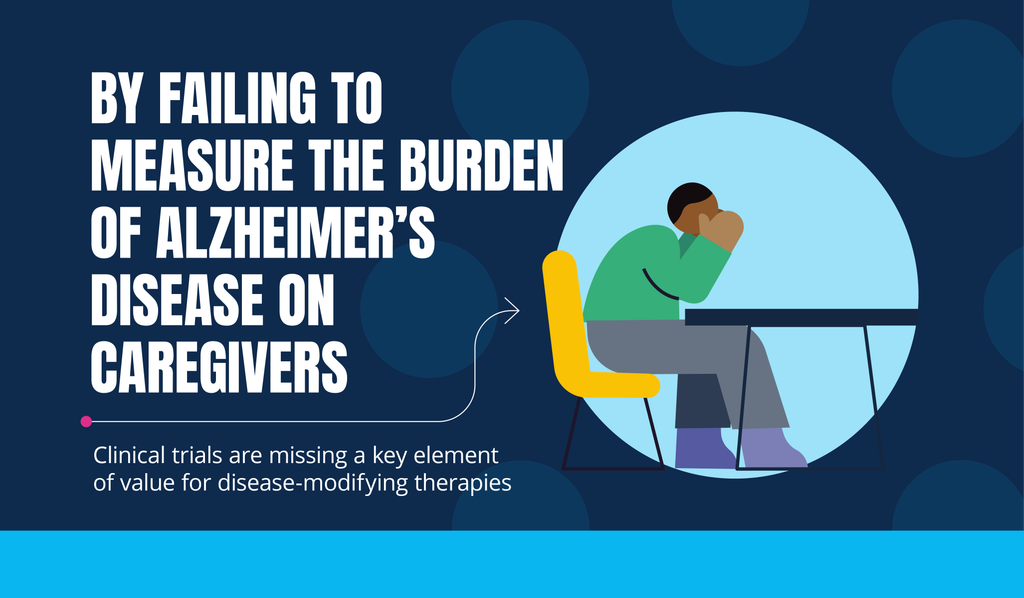
Alzheimer’s disease and other forms of dementia affect more than just the patient.
But our research suggests the impact on caregivers remains largely absent from the trials defining value for disease-modifying therapies for Alzheimer’s disease.
The question
Caregivers are central to the reality of Alzheimer’s disease (AD). So how often is their experience actually captured in clinical development? Our Medical Strategy team audited 97 eligible trials of disease-modifying therapies for AD to find out.
The findings
Just 16.5% measured caregiver burden or distress.
And even when it was measured, caregiver outcomes were not prioritized within trial endpoint strategies. No confirmatory phase 3 trial included a caregiver measure as a primary endpoint, although caregiver burden was included as a primary outcome in one real-world study.
Utility evidence, required for economic evaluation and HTA, for caregivers was even more limited: only two trials collected EQ-5D data on caregivers’ own health.
This contrasts with the emphasis placed on caregiver burden as a meaningful treatment outcome by Alzheimer’s advocacy organizations.
Why it matters
If caregiver impact isn’t adequately captured, we may be missing part of the value a treatment delivers.
For future AD trials, that creates an opportunity to think about caregiver outcomes earlier: what we measure, how we measure it, and where it sits within trial design.
The takeaway
Caregiver burden is part of the disease. It should be part of the evidence.
Closing this gap could help create a more complete picture of treatment value for patients, caregivers, and health systems.